CarePath Solutions

The Caregiver’s Touch: How Human Presence Accelerates Healing
Healing doesn’t happen in isolation, it happens in connection. This piece explores the powerful truth that caregiving is more than support; it is a biological force that helps the body recover. When someone feels safe, seen, and cared for, their nervous system calms, stress hormones drop, and the body shifts into a state where healing becomes possible. Through a blend of science and lived experience, this article shows how a caregiver’s presence can regulate emotions, strengthen resilience, and create the stability that medical treatment alone cannot provide. It highlights why human connection is not an accessory to healing, but a central part of it, a form of medicine in its own right.
enoma ojo (2026)
6/15/20261 min read

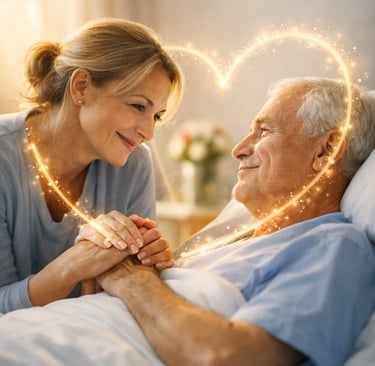
Healing is not just a medical process, it is a human one. Long before technology, pharmaceuticals, or modern hospitals, people healed in the presence of others who cared for them. Today, neuroscience and behavioral medicine are finally catching up to what caregivers have always known: the body recovers faster when it feels safe, supported, and connected.
Caregiving is often described as emotional labor, but in reality, it is biological intervention. A calm voice, a steady presence, a hand on the shoulder, these are not small gestures. They regulate the nervous system, lower cortisol, stabilize breathing, and help the body shift out of survival mode. When the alarm quiets, the immune system can do its work. Pain decreases. Sleep improves. The body begins to repair.
In a fragmented healthcare system, caregivers become the continuity patients desperately need. They notice subtle changes, prevent complications, advocate when something feels wrong, and create the emotional stability that clinical environments often overlook. Their presence fills the gaps between appointments, instructions, and medical decisions, the spaces where fear and uncertainty tend to grow.
Caregiving accelerates healing because it restores something medicine alone cannot provide: the feeling of being held, not just treated. When people feel seen and supported, their bodies respond. Their hope strengthens. Their resilience returns. Their healing deepens.
Caregivers are not an accessory to recovery. They are part of the treatment plan, a vital, evidence‑based force that turns care into healing and presence into medicine.
Read more healthcare blogs @ www.enomaojo.com
www.texascaresolutions.com