CarePath Solutions

Managing Health and Human Services Compliance and Regulations: Building Trust Through Structure
In healthcare, compliance isn’t just about meeting requirements; it’s about protecting people and preserving trust. This article explores how effective management of Health and Human Services (HHS) regulations transforms an organization’s integrity and performance. It breaks down the essentials of building a compliance culture that values clarity, consistency, and accountability. Readers will learn how structured systems, from documentation to audits, can evolve from bureaucratic tasks into strategic tools for safety and excellence. By viewing compliance as a living framework rather than a checklist, agencies can strengthen their credibility, improve outcomes, and create a foundation of trust that supports both caregivers and patients.
enoma ojo (2026)
6/15/20261 min read

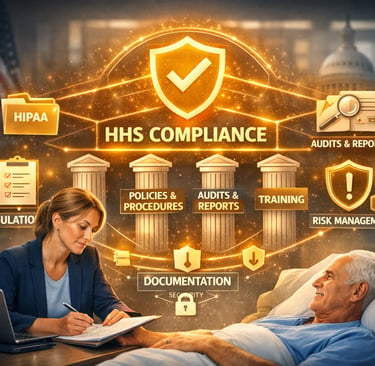
Compliance isn’t paperwork, it’s protection. In healthcare, every policy, audit, and checklist exists to safeguard patients, staff, and the integrity of care itself. Yet for many agencies, compliance feels like a maze of acronyms and deadlines. The truth is simpler: regulatory alignment is the foundation of trust.
Managing Health and Human Services (HHS) compliance means understanding that every regulation, from HIPAA to 26 TAC Chapter 558, is a living framework. It evolves with technology, ethics, and public need. Successful agencies don’t just “meet” requirements; they integrate them into daily operations. Policies become habits. Audits become opportunities for improvement. Documentation becomes a language of accountability.
The most effective compliance systems share three traits:
Clarity: Staff know what’s required and why it matters.
Consistency: Procedures are standardized, reducing risk and confusion.
Culture: Compliance isn’t enforced; it’s embraced as part of professional identity.
When compliance is managed well, it transforms from a burden into a competitive advantage. It signals reliability to regulators, confidence to clients, and pride to employees. In a sector built on care, structure is not bureaucracy, it’s the architecture of safety.
Read more healthcare blogs @ www.enomaojo.com
www.texascaresolutions.com